menu   Home About Me My TpT Shop Extras Blogs I Love  
Showing posts with label Literary Sherri. Show all posts

Teacher Appreciation Giveaway

Teacher Appreciation Day is celebrated across the globe. In the U.S., the recognition day -- celebrated in large part because of Eleanor Roosevelt's efforts to recognize and honor teachers -- is always the Tuesday of the first full week of May. Evidently, there was some confusion this year as May 1 was a Monday. My 2017 wall calendar -- made by a popular company that sells hundreds of thousands of calendars a year -- labeled Tuesday, May 2, as Teacher Appreciation Day, but a quick Google search says it is Tuesday, May 9. So, I guess it depends on one's interpretation of the "first full week" -- does that start on a Sunday or a Monday? (Fun fact: Did you know in many countries, including most European countries, Monday really IS the first day of the week and Sunday is the last day?! Our "English calendars" are as confusing to most of the world as our measurement of weight in ounces and pounds and distance in inches and miles. But I digress.) At least one local school district in my neck of the woods is recognizing their teachers on Tuesday, May 16 . . . and I think all the confusion is a great reason to celebrate teachers all month long because the truth is E.VER.Y.DAY should be Teacher Appreciation Day! So, whether you were celebrated last week, this week, or next week, please soak it all in and know you really deserve to be recognized and appreciated every week!


Thank you, Teachers, for caring about your students, cheering them on to success, and helping each student learn the way she or he best learns by constantly refining, revising, modifying, evaluating, expanding, adjusting, clarifying, scaffolding, reteaching, and adapting every lesson, all day long, in thirty-two different ways . . . while simultaneously preparing students for standardized tests, reminding them the test does not define them as a person or as a learner, getting band-aids for their mishaps, helping them mend broken hearts, asking about their weekends and connecting with them over their favorite performers, books, or sports teams, laughing with those students who are having the best day of their lives today and crying with those who are having the worst day ever, encouraging students to keep doing their best with hugs, high-fives, pats on the back, thumbs-up, and fist-bumps -- and knowing exactly who prefers each -- and making mental notes of who needs shoelaces, mittens, lunch money, a new composition notebook, or a supplemental activity to help them better understand the lesson and when pay day is so you can care for each of their needs. Kudos to you, Teachers, for all the ways you strive every day to be and give and do what each individual student needs in order to grow into knowledgeable, informed, inspired, compassionate, empathetic, motivated, engaged life-long learners!

I don't know about you, but I'm exhausted thinking about all you do! I wish I could treat every single one of you to a well-deserved cup of steaming hot coffee, soul-warming vanilla chai, creamy macchiato, fruity iced tea, or frozen frappuccino . . . and a donut, because donuts make everyone feel celebrated!


Instead, I have teamed up with the fabulous Selma Dawani to give ten teachers a $5 Dunkin' Donuts giftcard. Enter the rafflecoptor below for six chances to win . . . we'll announce winners on Wednesday, May 10. 
. . . and because we wanted to give ALL the teachers a treat, we created a fun set of note cards and bookmarks for you to print and give to your colleagues, your students, or your own sweet kiddos. Click here to download your free note cards and bookmarks today . . . and know that you are appreciated today and every day for all you do. Donut ever forget that you truly are our heroes! Thank you, Teachers!


Enter for 6 chances to win a $5 Dunkin' Donuts gift card!
a Rafflecopter giveaway
P.S. Because we r-e-a-l-l-y want you to feel valued and appreciated, don't forget about the Teachers Pay Teachers sale on May 9 and 10 . . . every resource in our stores will be 28% off! Stock up on these end-of-year goodies that will help you sail through the rest of May and June . . . or these back-to-school resources that will set you and your students up for success all year long!


Create an Inclusive Learning Environment that Eliminates Gender Stereotyping

As a middle school English Language Arts teacher, part of my teacher soul dies inside every time I see elementary schools using DIBELS or other similar reading programs that use nonsense words to teach phonics-based reading and timed reading tests to stress speed over accuracy. Intentionally or unintentionally, these programs teach young learners that reading fast is more important than reading well. Students using these programs learn that decoding is infinitely more important than comprehension. While teachers in primary and intermediate grades may not see the long-term effects of these programs, every middle school and high school teacher sees them when students make decoding errors and just keep reading instead of stopping to repair meaning. Thanks to nonsense words and an emphasis on reading fast, teens who make reading errors just keep going and going – like the Energizer Bunny – rather than thinking, “That sentence didn’t make sense; I need to go back and fix my reading so that sentence makes sense.” The older the student, the more difficult it is to unteach ineffective practices and replace them with effective skills.

Gender stereotyping is similar. Like poor reading practices, what is and isn’t acceptable and appropriate for girls and boys to do or to be interested in becomes so ingrained and automatic that it’s extremely difficult to “unteach and reteach” later, when students are older and stereotypes and expectations are so entrenched they are either limiting, painful, or both. Sadly, this often leads to hobby and career choices that do not match individual strengths and interests. More importantly, gender stereotyping (and ingraining) – overtly, subliminally, intentionally, or unintentionally – results in sexism in teen years and beyond, and it’s REALLY difficult to unteach sexism and reteach acceptance, empowerment, and broad-mindedness.

Our students are bombarded every day with media messages that convey gender stereotyping. Current research says toys and clothes are more gendered now than they have been at any time in the past, when gender stereotyping, discrimination, and sexism were more of the societal norms. Toys, clothes, books, and tv shows that are marketed to girls prominently feature pretty pink princesses and an emphasis on homemaking, while marketing to boys features industrial or skills-oriented toys and muscular super heroes and action figures. Ads for Easy Bake Ovens still feature purples, pinks, and girls baking cupcakes while ads for Queasy Bake Ovens are filled with blues, greens, and boys conducting science experiments. This gendered marketing is still prominent in the 'tween and teen sectors. Teen girls are told they can be anything, but their "anything" is still portrayed as beautiful, sexy, and pink, while teen boys are bombarded with male figures that are brawny, powerful, and usually blue.

Stereotyping-that-leads-to-sexism is just as common in our language as it is in our media. When studying primary source documents or reading classic literature, students quickly learn that the terms men, mankind, and he are to be interpreted to include all people. Even today, all first-year high school and college students are referred to by the gender-biased term "freshmen."  While recent texts are certainly more inclusive in wording, gender bias is still strong in our language. While adult males are often referred to as dudes or bros, implying assertive, masculine roles, adult females are frequently referred to as "girls" -- implying passive, immature, child-like roles. Synonyms for females are much more sexualized than synonyms for their male counterparts. In fact, while our language includes around 20 sexualized terms for males, we have well over 200 sexualized terms for females. We also have many more derogatory and demeaning terms for girls and women than we do for boys and men. Even our adjectives tend to be gender-biased. While males are often described a ambitious, driven, or assertive, females with the same qualities are described as bossy, abrasive, or aggressive. When was the last time you heard a male described as feisty, frigid, or frumpy -- or curvy, ditsy, or sassy?

How can teachers counter-balance these cultural messages in our classrooms and intentionally create learning environments that are more inclusive?


First and foremost, teachers should be at the forefront of awareness and intentionality about the words we use and the ideologies our words convey. We should also be at the forefront of learning better and doing better. That’s not about political correctness . . . it’s about respect, dignity, and valuing each individual student for their humanity rather than their masculinity or femininity. There’s nothing wrong with being masculine or feminine; however, there’s a whole lot wrong with the expectation to be one or the other based on one’s gender, and a whole lot wrong with the sexist ideologies so often normalized and internalized as a result.

Here are some concrete ways teachers can create a learning environment that is more inclusive and eliminates gender stereotyping:
  • Instead of dividing your class or groups by gender, use other, more creative ways to divide groups.
  • Instead of using pinks or pastels to indicate femininity (or girls’ tasks and activities) and blues or primary colors to represent masculinity (or boys’ tasks and activities), use a variety of colors for all genders.
  • Instead of using gender-specific descriptors such as firemen, policemen, mailmen, and chairmen, use more inclusive terms, such as firefighter, police officer, mail carrier or postal worker, and chairperson. 
  • Instead of using masculine-biased terms for groups of people, such as, “You guys” or “fellow teachers,” use gender-neutral terms, such as “you all” or “teaching colleagues.”
  • To the greatest extent possible, avoid texts, activities, and worksheets that promote gender bias and stereotyping (including in graphics). When you notice these subtle (and sometimes not-so-subtle) messages, talk about them with students -- and why they are erroneous.

Gendered language tends to favor power imbalances, with males and masculine terms holding greater power. Being intentional about breaking gender stereotypes and using gender-neutral language that respects diverse identities, is inclusive, and promotes an unbiased balance of power encourages all students to break gender stereotypes and ingrained sexism and to be more inclusive and intentional with their own language.

Walt Whitman was once asked to name the ugliest word in the English language. Almost without hesitation, he answered, “Exclusion.” Modeling inclusive language for our students is one way we can teach them to be more accepting, empathetic, and inclusive, and portray the possibility that both genders can explore and develop wide ranges of interests and skills  – a win-win for them now and in their futures . . .  afterall, our words become our destinies!


Click here or on the image below to download this free quote analysis worksheet for your students ...


. . . and visit the blogs below for more ideas about practical and meaningful ways to integrate empowerment, equity, and empathy in your classroom today!


Using File Folders to Create Organizational Systems in Your Classroom

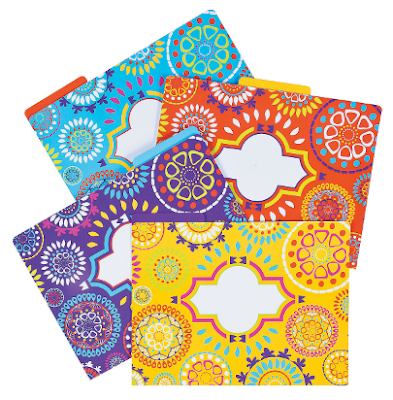
My love for organization and systems is well-known, so I especially adore finding practical and affordable supplies that help keep a classroom well-organized and ultimately, help save teachers a bit of time. I believe students learn better in tidy, organized spaces where they can focus and concentrate on academic tasks without the distraction of clutter . . . so I'm all about office supplies! Finding supplies that also add a pop of color -- like these sturdy and budget-friendly file folders from Oriental Trading Company -- makes my teacher-heart pitter-patter!


Middle school and high school teachers know how challenging it is to find the exact right pass for students at the exact right time. Students need passes to see the nurse for their allergy meds, go to the office to call a parent about their forgotten gym clothes, finish their research paper in the computer lab during study hall, see the counselor during lunch about the argument they had with their best friend on the school bus, early dismissal for an appointment with a doctor who doesn't see patients after 3pm, go to the media center, the science lab, the library, the discipline counselor . . . the list -- and the corresponding pass -- is never-ending. File folders to the rescue! Here's how I solve the pass dilemma:

1 - Fill out all the info on each pass that is going to be the same every time (usually your name, grade, and room number).
2 - Make a few dozen copies of each pass.
3 - Store passes in labeled file folders taped (or stapled) to a wall, door, the side of a filing cabinet, or a cork board.
4 - When students need a pass, they're responsible to get the appropriate form and fill in all the necessary information.
5 - Glance at the info they included on their pass and sign it.

This simple system accomplishes several things at once:

  • It saves you time -- no more digging through filing cabinet drawers or desks looking for the right pass to match the right need.
  • It maximizes your storage space -- free up that precious drawer space for papers that need more confidentiality.
  • It makes students responsible for their own needs and self-advocacy -- important life-skills. 

With five extra minutes and some packing tape, you can create a cascading file.


In addition to organizing forms and passes, cascading files can be used to collect or distribute papers to each class period, store daily classwork for absentees, organize papers to be copied or filed, or collect exit tickets as students leave the classroom.  

Here's to using five minutes and some "found space" to keep our students more organized, our classrooms running smoothly, and our decor engaging!

PIN TO SAVE OR SHARE:

Empathy, Empowerment, and Equity in Our Classrooms

I recently attended a teach-in at a local university, where I heard an artist speak about her discouragement with our divisive social and political climate. She stopped working because she couldn’t muster any inspiration or creativity and holding on to positivity seemed increasingly difficult. After several weeks of being unproductive and listless, her mentor invited her to coffee and gently nudged her to talk about why her work was at a standstill. After pouring out her heart, her concerns, and her fears, her mentor responded with, “Artists have always created their greatest works in times of greatest conflict.” This conversation inspired her to harness her anger, frustration, and discouragement and channel it into meaningful and powerful creations.

It occurred to me while listening to her that it is in times of greatest conflict that teachers accomplish their greatest and most influential work. 


Regardless of where we are personally on the political spectrum, we cannot deny that as a country, we have experienced a huge increase in recent months in harassment, bullying, and hate crimes and we all have some students who feel confused, upset, fearful, and marginalized. It’s exactly at times like this that teachers make their biggest difference and have their most influential impact on students’ lives. Students watch carefully and listen closely, and even our most innocuous words can affect them for years to come. This is a time for teachers to rise up, be the change we wish to see in the world, and teach our students that we all can and must do better!

Teaching can be physically, mentally, emotionally, and spiritually depleting in the best of times . . . even more so in the toughest of times. First and foremost, take good care of you! If your tank is empty and you are running on fumes, you cannot care for others. Here’s a few reminders to help you take good care of yourself during difficult or stressful times, especially seasons of prolonged or ongoing stress or crisis:


Next, help students develop healthy coping strategies when they feel marginalized, angry, afraid, or bullied -- or anytime they are dealing with drama, crisis, or a difficult situation. Here’s a guided journaling worksheet that can help:


Click here to download a free copy you can print.  Consider keeping a stack of copies in a quickly accessible location so students can grab one and fill it out any time they need to cool down, cope, process, or come up with an action plan.

Finally, check back here on the last weekend of every month for more tips, ideas, strategies, and free resources you can use to help teach empathy, empowerment, and equity in your classroom. This month, I wanted to give you resources to help you and your students care for yourselves during tough times. In the coming months, I'll provide more resources specific to teaching, implementing, and integrating empathy, empowerment, and equity.

Bonus! I’m teaming up with TpT colleagues who are as passionate as I am about these values and providing teachers with a vault of free resources to help integrate them into your everyday teaching. 


Check out the collaborative blog posts below for more ideas and resources, comment and let us know what types of materials we can provide to help your students and to save you precious time, and let’s keep this important conversation going!


Celebrate the New Year with New Resources!


On Sunday night, 12/31/16, not one but TWO lucky winners will receive $25 in resources from my TpT store AND a $25 gift card to spend in any TpT store they'd like! To enter:

1 - Follow me on Instagram and like the Instagram post,

2 - Comment on the Instagram post with your 2017 wish for your students, and

3 - Tag a teacher-friend on the Instagram post for one bonus entry per teacher-friend that you tag!

Wishing you and your students many meaningful learning moments in 2017! Happy New Year!

Why I Wear a Safety Pin


Adopting tangible symbols of peace, hope, and nonviolent resistance is a centuries-old practice. Ancient Greeks used an olive branch to symbolize peace. A symbol of wishes granted for centuries, paper cranes have symbolized hope and healing for 6 decades in Japanese culture. Peaceful protesters in Taiwan use sunflowers to represent the light they wish to shine on oppressive government policies. In Hong Kong, umbrellas symbolize peaceful protest, and women in Iran frequently wear brightly-colored nail polish to express their resistance to the extreme oppression they endure.

In April of 1940, just months into World War II, Adolf Hitler set his sights on an invasion of Norway. Controlling their ice-free waterways would make it quicker and easier to transport goods into Germany. German soldiers occupied Norway for 5 years, insisting that teachers and churches teach complete obedience to the leader and the state, passing anti-Jewish legislation, and deporting 700 Norwegian Jews to Auschwitz.

In the autumn of 1940, students at Oslo University started wearing innocuous paperclips on their collars and lapels to symbolize the binding together of like-minded Norwegians in a rejection of ethnocentric ideologies, peaceful resistance, and solidarity. Pins, bracelets, and jewelry fashioned out of paperclips bound like-minded Norwegians together in the face of adversity.

In December 2014, an Iranian refugee took hostages in an armed standoff in Sydney, Australia. By the end of the 16-hour ordeal, he had killed 2 hostages, prompting intense and violent Islamophobia to erupt across the country. Australian Rachel Jacobs posted on Facebook that she saw a Muslim woman remove her hijab out of fear for her own safety. Jacobs encouraged her to put her hijab back on, promising to walk with her and make sure she was safe. Her post prompted a social media campaign using #illridewithyou in which Australian citizens offered to walk, ride, or sit with Australian Muslims so they would feel safe and protected.

In post-Brexit United Kingdom, when there was a sharp rise in unprovoked attacks and hate crimes against both ethnic minorities and immigrants, a Twitter user named Allison, inspired by Australia’s #illridewithyou campaign, started wearing safety pins to symbolize a rejection of racism, peaceful push back against violence, and solidarity with immigrants. After tweeting photos of her safety pins and explaining, in 140 characters or less, the meaning behind the small gesture, the idea took off. Safety pins are commonly worn in the U.K. as a signal to marginalized groups that they are valued and supported. Thousands of U.K. citizens joined the #safetypin movement in a joint effort to communicate to marginalized and sometimes victimized immigrants, “You are safe with me.”

Since the 2016 general election in the U.S., millions of American citizens are concerned – scared, even – about the seemingly sharp rise in hate-based harassment, vandalism, violence, bullying, and crime being perpetuated against U.S. citizens – citizens who are often labeled “minorities” and are marginalized. As a result, the “Safety Pin Movement” has found a place here.

Many criticize or even condemn the gesture for being superficial and shallow, calling those who wear the pin “slacktivists” – a pejorative term used to describe people who think of themselves as social justice activists, but who only get involved with “easy activism” and “feel-good measures” such as signing on-line petitions or sounding off on social media websites, not the hard work of stepping out of our comfort zones to participate in street demonstrations, visit elected officials to demand change, or support organizations that actively work to affect social change with ongoing financial contributions. In other words, safety pin wearers are often criticized for doing something easy to “pat themselves on the back” without doing the hard work of actively trying to fix the problems they are peacefully protesting.

White people, in particular, are facing backlash for wearing safety pins as a passive and elitist action – an easy way to identify themselves as allies while doing none of the hard work it takes to help affect change. Christopher Keelty said in the Huffington Post, “We don’t get to make ourselves feel better by putting on safety pins and self-designating ourselves as allies. And make no mistake, that’s what the safety pins are for. Making white people feel better.” Others have criticized safety pin-wearers as lazy, saying they are being worn as a way for white people to identify themselves to other white people as having voted -- or not voted -- a particular way in the most recent general election in the U.S.

I acknowledge the limitations of this gesture or symbol. Wearing a pin doesn’t fix racism, xenophobia, exclusion, or cruelty. However, despite the sharp criticism and safety-pin shaming, I wear a safety pin and will continue to do so. Here’s why:

  • It is a concrete symbol that bigotry, racism, misogyny, xenophobia, and bullying are not the norms in my circles, and I will actively take a stand against those ideologies in all their forms. If it reminds even one other person to actively stand for inclusion, acceptance, empathy, and kindness, it’s worth wearing.
  • I will actively take a stand against those ideologies in all their forms. I will not just wear the pin – I will attend the demonstrations, write my elected officials, contribute financial support to organizations actively working to affect change. Wearing a safety pin reminds me to actively be the change I want to see in the world, and if it reminds even one other person to do the same, it’s worth wearing.
  • Awareness is important. Awareness by itself doesn’t change things. It isn’t enough. It doesn’t solve problems. However, if enough people work together to raise awareness and use that awareness to dialogue about what we can actively due to help shift cultural norms, then awareness can lead to action, and action changes things. If my safety pin reminds me to act and inspires even one other person to act, it’s worth wearing.
  • Brain research shows that telling people what to do isn’t as effective as showing them what to do and how to do it. If enough people use their sphere of personal influence and social media influence to demonstrate actionable steps we can take toward inclusion, kindness, empathy, and acceptance, we can create social change. If my safety pin prompts even one person to ask why I wear it, and leads to even one discussion about the ACT in activism, it’s worth wearing.
  • Pinning this symbol to my clothes is a small gesture of community, participation, rejecting self-centeredness and apathy, being part of something bigger than my own little space in this world. If it symbolizes that to even one other person, and encourages them to share in this sense of community and togetherness, it’s worth wearing.
  • Knowledge is power. Some don’t understand the symbolism behind the safety pin, or the importance of real activism. If even one dialogue is sparked by a question about my pin, it’s worth wearing.
  • Helplessness, hopelessness, and despair are paralyzing, and we are flooded daily with media stories that incite these emotions. If wearing my pin symbolizes help, hope, and healing to even one person, it’s worth wearing.
  • Wearing a safety pin is not enough, but it may be enough to remind us to ask ourselves and one another what else we can do. It’s not a resolution – but it may be a start. It may lead to work toward a resolution.  If my pin inspires even one person to ponder this, it’s worth wearing.
  • Wearing a safety pin may indicate to a person who lives in fear of being marginalized, bullied, or victimized that I am a safe person. If I witness someone being bullied or victimized, I will not be a silent bystander. I will stand with them and for them. I will help. If my pin conveys that knowledge -- that safety -- to even one person, it’s worth wearing.
  • Wearing a safety pin may instigate dialogue with students and colleagues about the importance of active inclusion and kindness, and if even one student or colleague is inspired to think about these concepts, have these important conversations, act on these values, it's worth wearing. 


So, when you see my safety pin, please don’t assume I wear it out of privilege or guilt or an effort to assuage my guilt. The truth is, I understand first-hand what it’s like to be marginalized and bullied for one facet of the thousands of facets that make up who I am as a whole person. Even though on the outside, I may not “look” like a person who understands and experiences marginalization, I do. I hope I would stand with and for marginalized people even if I wasn’t a person who experienced this myself. I know my own experiences make me acutely aware of and responsive to others’ experiences. My other truth is, in some ways, I do experience privilege that others don’t enjoy. I am acutely aware of this and in the ways I am privileged, I will use that privilege to tirelessly work for inclusion and equality for all.

When you see my pin, please don’t assume it is the only thing I am doing. Don’t assume I am lazy, or a slacktivist. Don’t assume I’m not serious about intentionally and actively affecting change. Don’t assume I wear it to make myself feel better. In fact, I want anyone and everyone who is negatively affected by hatred, exclusion, or “othering” in any form to know I stand with them, for them, beside them, behind them, in front of them – whatever it takes – and knowing there is a need to stand against exclusion and for inclusion breaks my heart. I don’t feel better about myself by putting the pin on – I feel worse for all of us that there is a need to put the pin on.

When you see my pin, please don’t assume you know how I cast my vote. I believe acceptance, inclusion, and kindheartedness can bridge the gap between our differences, no matter whom we voted for and why. Despite political differences – despite all differences – we can find some common ground, stand with one another against bigotry, hatred, injustice, and othering, and stand together for compassion, empathy, and kindness.

When you see my pin, please don’t lash out at me for attempting to show solidarity and support. Instead, please consider that wearing the pin is a statement of my personal values . . . inclusion, acceptance, compassion, empathy, and kindness. But if you do judge me, if you do think poorly of me, if you do criticize me when you see my pin, know that those values – conveying them, reminding myself of them, inviting others to dialogue about them -- are so dear to me that I will wear a safety pin despite the controversy. Kindness matters, and if wearing a safety pin conveys encouragement to even one person who needs to feel a little kindness today, it’s worth it.

Fidget Widgets Can Enhance Learning in Middle School Classrooms (Part 2)

Ready to incorporate fidget widgets into your classroom management plan? Some of my favorite fidgets include:

If you're on a tight classroom budget, you can make your own fidgets by using a wide-mouthed funnel to partially fill latex balloons with clean sand, flour, cornstarch. or play dough. Doubling or tripling the balloon covering will help these homemade stress balls last longer.

You can also stop by your local hardware store or carpet store and gather small carpet samples (approx. 3" x 3"). Ask if they'd like to donate a dozen or so samples to your class. (Run fabric glue around the edges to keep them from fraying, if you'd like.) Small carpet samples make fabulous fidgets!

Other super-effective ideas include:
  • Bands
    • Stretch a therapy band, resistance band, bicycle inner tube, or giant rubber bands around the front legs of each chair, allowing students to silently bounce their legs or feet on the band.
  • Velcro
    • Cut adhesive Velcro into 4-6 inch strips. Adhere 1 strip on either side of the underside of students' chairs. You can also adhere strips under tables or desks. You really don't even need to tell students the strips are there . . . fidgety students will find them and the strips will keep their fingers occupied for awhile.

    Be picky when choosing the perfect fidget widgets! You want fidgets that are:
      • Inconspicuous 
        • Fidgets should fit easily in one hand and be able to be used under a desk or table.
      • Inexpensive 
        • They may get lost or find their way out of the classroom. You'll likely replenish them a few times throughout the year, so don't invest inordinate amounts of money in them.
        • Silent
          • Fidgets that make noise (or that can be used to make noise) should be avoided, if possible.

        • Safe
          • Pass on fidgets that can be snapped, popped, or thrown across the room, unless you can prevent these scenarios with effective pre-teaching.
        • Tactile
          • Fidgets should be more tactile than visual -- they should not draw students' eyes away from the task at hand.
        • Tools, not toys
          • Balls or objects that bounce or roll are not ideal fidgets.

        Fidget widgets help enhance focus and concentration, decrease off-task and distracting behaviors, and increase learning for middle school students -- and the bonus is incorporating them into your everyday classroom management plan differentiates your classroom learning space and optimizes your middle school classroom for all learners!

        Not convinced? Click here to read more about how fidgets can enhance learning in Middle School classrooms -- and how to pre-teach so that you can incorporate them seamlessly into your cclassroom management plan!

        Do you have a favorite fidget widget? Tell us about it and how you use it in your classroom!

        Fidget Widgets Can Enhance Learning in Middle School Classrooms (Part 1)

        We've all been there -- after countless hours planning, preparing, and anticipating a rigorous learning activity that's also fun and engaging, we feel disappointed, stressed, or frustrated afterward because a few restless students distracted the entire class from enjoying -- or even completing -- the lesson. Drumming, tapping, off-task talking, irrelevant giggling, clicking pens, excess bathroom breaks, never-ending pencil sharpening, rummaging, and fidgeting not only distracted on-task students from learning, but made it difficult for the teacher to focus, too.

        Middle school bodies are physically changing -- skeletal structures are changing daily and students genuinely need to stretch, squirm, wiggle, and fidget to comfortably accommodate their (literal) growing pains. While fidgeting is developmentally appropriate for middle schoolers, it can be harnessed and intentionally focused so that it's not only less distracting, but also enhances learning!

        Fidget widgets to the rescue! When used correctly, fidget tools -- or fidget widgets, as I call them . . .
        • Increase active listening
        • Calm anxiety and/or restlessness
        • Channel excess energy
        • Accommodate students' developmental need for movement
        • Help students focus and concentrate on the task or activity at hand
        • Increase learning

        That's right . . . fidgeting during class can actually increase learning because it engages both hemispheres of the brain and helps students focus and concentrate on learning activities!

        The effective use of fidget widgets in middle school classrooms takes a bit of pre-teaching. Students need to know how they can use these tools:
        • Use fidgets silently
        • Fidgets are for your hands, not your eyes
        • Keep fidgets under the desk or table, or on your lap

        . . . and they need to know how they cannot use fidgets:
        • Fidgets cannot be thrown, tossed, or otherwise transported across the classroom
        • Fidgets cannot be used in the air, above your head, or where they will distract from learning
        • Fidgets cannot be used as eye glasses, megaphones, air guitars, vehicles, or airplanes

        Students may not always remember to grab a fidget when they need one. Don't hesitate to walk over during class, nab a fidget out of the basket, and silently place it within a student's work space. This is a silent cue to the student to channel their energy in a less distracting way.

        You may also need a silent signal indicating that a fidget is being misused and the student is about to lose the privilege of using it for the rest of that class period if their actions don't immediately change. <insert your most teacher-y teacher look here>

        After a bit of pre-teaching, keep a container of fidget widgets near the classroom door. Invite students to take one any time they need to keep restless fingers busy and minds focused. Remind them to drop their fidgets back in the basket as they leave class.

        Fidget widgets help channel restlessness, decrease distracting behaviors, and increase focus and concentration for middle school students. Incorporating them into your everyday classroom management plan differentiates your classroom learning space and optimizes your middle school classroom for all learners -- a superb bonus!

        Ready to incorporate fidgets into your Middle School classroom management plan? Click here to read about 12 of my favorite fidgets and a couple of super budget-friendly do-it-yourself fidgets . . . and leave a note below telling us about your favorite fidget widgets and how you use them in your class!


        All Treats & No Tricks - Free Resources for Teachers!


        Can you believe we're already heading into the whirlwind that is the end of October?!?

        Speaking of the end of October, look at these classroom tricks that will take your teaching to the next level this fall!

             The Power of Audio Books
             Meaningful Prompts for Struggling Readers
             Silent Signals: Cups

        Of course, you can't have tricks without treats. Thanks to Darlene Anne from ELA Buffet and Pam from Desktop Learning Adventures, The Secondary Smorgasbord has you covered with some amazing free resources that are perfect for this time of year!

        My treat for you . . . Tic Tac Tale! Nothing grabs students' attention quite like Edgar Allan Poe’s creepy classic, “The Tell-Tale Heart.” After teaching this spooky story, students use Tic Tac Tale to complete 3 unique writing responses, then choose one of those responses to revise, edit, and polish. Students love all the fun choices and teachers love seeing their students engaged in writing! Click here or on the images below to grab Tic Tac Tale for your students . . . then grab a mug of steaming hot apple cider and hop through the blogs below to enjoy some amazing free teaching resources for 6th-12th grade teachers!

        https://www.teacherspayteachers.com/Product/Tell-Tale-Heart-Tic-Tac-Tale-2132613

        https://www.teacherspayteachers.com/Product/Tell-Tale-Heart-Tic-Tac-Tale-2132613


        5 Ways to Make the Most of the TpT Back to School Sale

        https://www.teacherspayteachers.com/Store/Literary-Sherri

        It's the most wonderful time of the year . . . time to prepare for another school year! I love the excitement, anticipation, and energy this time of year! And I'm super-excited to team up with some amazing 6-12 English teachers to highlight a host of ideas, resources, tips, and strategies throughout the year that will help make 2015-16 one of your best year's yet!

        Over the past 3 months, I've had the opportunity to meet several of The Literary League teachers in person. They are the cream-of-the-crop . . . master teachers, knowledgeable about relevant education trends, passionate about their craft, and genuinely good people!

        https://www.teacherspayteachers.com/Store/Literary-Sherri

        Awesome Bonus: The 6-12 English resources these teacher-authors are creating are the best resources on the market, and several of these resources will be highlighted here throughout the upcoming year -- starting this week, with the annual sitewide sale at Teachers Pay Teachers!

        That's right, it's time to take advantage of the the annual TpT Back-to-School Sale as you prepare for the exciting year ahead! Getting ready for a new school year can be expensive . . . let us help you with some top-notch resources at great back-to-school prices! The sale is Monday and Tuesday, August 3 and 4. Save up to 28% with the sale code: BTS15.

        Here are some ways to take full advantage of the sitewide sale:

        -Log in to your Teachers Pay Teachers account.

        -Go to your 'My Purchases' page and make sure you've left feedback on all past purchases. Doing so builds credits that you can use toward your sale purchases, stretching your hard-earned dollars even further!

        -Buy bundles! Many sellers reduce already-discounted bundles during site-wide sales. For instance, all the money-saving bundles in my store are reduced an additional 28% during sales . . . bringing your total savings to nearly 50%! Look for bundles to get even more bang for your buck!

        -See if your favorite TpT Teacher-Authors have a "Buy My Entire Store" option. These super-mega-bundles usually save you big bucks. Save even more by picking them up during sitewide sales!

        -Check your Wishlist! Sitewide sales are a great time to purge resources you're no longer interested in and nab those you still want!

        -Finally, don't forget to enter your sales code before you checkout! Your code for this sale is BTS15. Use it and enjoy the back-to-school love!

        https://www.teacherspayteachers.com/Store/Literary-Sherri

        Speaking of love, The Literary League puts a lot of love into their resources . . . and they're sharing the back-to-school love with you during this back-to-school sale! Don't forget to check out these amazing TpT shops . . . you'll discover a lot of resources you can't live without, and you may find a few new favorite TpT sellers in the process. It doesn't get better than that!

        Literary Sherri
        Danielle Knight (Study All Knight)
        Darlene Anne- ELA Buffet
        Mrs. Spangler in the Middle
        Created by MrHughes
        The Classroom Sparrow
        The Daring English Teacher
        ELA Everyday
        Juggling ELA
        Nouvelle
        Making Meaning with Melissa
        2 Peas and a Dog
        Secondary Solutions-Simply Novel
        Addie Williams
        Linda Jennifer
        Fisher Reyna Education
        The Creative Classroom
        Stacey Lloyd
        Room 213
        Brynn Allison
        Open Classroom
        Perfetto Writing Room
        Secondary Sara
        Tracee Orman
        James Whitaker
        The Superhero Teacher
        Created for Learning
        Brain Waves Instruction


        Happy Back-to-School Shopping!

        Literary Sherri Goes Back to School

        After a bit of a summer hiatus, I’m blog hopping today with The Literary League – some pretty fabulous secondary ELA teacher-authors. You should definitely know these teachers and their resources, as they create some of the highest-quality resources you will find anywhere. It’s a privilege to be collaborating with them, and I’m excite to introduce you to them!

        First, a bit about me . . . I was the kid who loved school and everything about it. In early elementary grades, I cried on the last day of school before holiday breaks and summer vacation. Literally. I spent summers setting up a classroom on a blanket in the corner of the living room and creating schoolwork for stuffed animals – and later for siblings and neighborhood friends. In 4th grade, I announced that I would be a teacher when I grew up . . . and I never considered anything else.


        I started teaching in 1992. After a brief stint in 6th grade, I settled into 7th and 8th grade English Language Arts and I love it! Middle schoolers are both fun and funny. They are curious about the world and their role in it; they exaggerate nearly every experience and emotion, and they are wildly optimistic about their possibilities and futures. They keep me on my toes and I thoroughly enjoy working with them!

        In life outside of school, I enjoy spending time with family and friends, traveling, theatre and museums, weekend getaways, photography, and getting lost in good books.


        Speaking of good books, one of my favorite books to teach is The Giver by Lois Lowry. I can read it over and over again and never tire of the story and the many meaningful discussions it lends itself to, and I always appreciate students’ thoughts about diversity, individuality, freedom of choice, wisdom, the importance of preserving memories and learning from the past, the possibility of creating a utopian society, and the advantages and disadvantages of sacrificing personal freedom to gain a more peaceful society. Middle schoolers have a lot to say about these thought-provoking topics and their insights never fail to amaze me! The Giver is an absolute must in middle school!

        https://www.teacherspayteachers.com/Product/Giver-by-Lois-Lowry-Complete-Unit-Grades-6-7-8-827371

        Speaking of school, it’s that time again . . . time to plan and prepare for a new year! I love the excitement and anticipation of a brand new school year! One of my favorite back-to-school activities is having students work in teams to design and build a new toy! Though you'd probably never hear them say it aloud, middle schoolers still love playing with interlocking building bricks! Ask them to get busy creating with a few friends, and they think they've just had the best school day of their entire lives! They think this activity is the bomb!

        I also think it's the bomb because it fosters team-building, critical thinking, collaborative problem-solving, communication, and social skills amongst students. It's collaborative and hands-on, it integrates other disciplines, and it allows me to start understanding students' learning and communication styles right away. While this is not your typical "get to know you" activity, it truly helps students get to know one another and connect with one another right away -- and it helps me get to know a lot about the students in my classes, as well! In fact, I'm so crazy about this back-to-school activity, that I've made it free! Grab it here and enjoy your first week back with students!

        https://www.teacherspayteachers.com/Product/Design-and-Build-a-New-Toy-Grades-5-6-7-8-395270

        I know you’ll enjoy hopping through these blog posts and getting to know a few other super-amazing secondary ELA teachers as much as I have!

        Happy Teacher Appreciation Week!

        I've taken a bit of a blogging hiatus to care for some other priorities, and I can't think of a better time to re-focus on blogging than Teacher Appreciation Week!

        To celebrate YOU, I am offering my End-of-Year Awards: Idioms free for 24 hours. These figurative language awards print 4-per-page, making them more appealing to middle school and high school students. One teacher who purchased this resource said, "These are great! I can't wait for the students to nominate each other in each of the categories! The learning lasts all the way to the awards assembly!" Click either of the images below to take advantage of this 24-hour freebie. Enjoy!

        https://www.teacherspayteachers.com/Product/End-of-Year-Awards-Idioms-4-per-page-Grades-5-6-7-8-1249936
         
        https://www.teacherspayteachers.com/Product/End-of-Year-Awards-Idioms-4-per-page-Grades-5-6-7-8-1249936
         
        The Teacher-Authors who make top-notch resources available on Teachers Pay Teachers also want to celebrate you and thank you for ALL you do with a 28% discount on TpT purchases! Here's some Super Secondary Sellers who think you rock 'n roll:

        https://www.teacherspayteachers.com/Store/Literary-Sherri

        Check out these stores to get all shook up about some superb savings on superb resources for 6-12 Teachers with the promo code: ThankYou


        Happy Teacher Appreciation Week!


        Is Cursive Writing Becoming a Lost Art?

        When I was an elementary student in the 70s (no comments form the peanut gallery, please!) penmanship was taught and practiced daily. I enjoyed penmanship class and on non-school days, I filled spiral notebooks with cursive writing -- I wrote out the states and capitals, the presidents, long lists of prepositions, the Gettysburg Address -- just because I enjoyed practicing my penmanship! (Yes, I was that student!) 
         
        It's not unusual in today's educational and political climates to hear heated debates about the demise of cursive writing in today’s educational system. Opponents of Common Core lambast the Initiative for omitting cursive writing from its teaching expectations. Some say cursive is obsolete in a digital world. Others argue that the demise of cursive indicates the demise of education in our country. Some argue that students will not be able to read historical documents. Others counter that they will not need to -- they will be able to quickly and easily find the contents of historical manuscripts online.

         
        I once taught in a K-8 school that taught only cursive writing from Kindergarten on. In addition, students were only allowed to write in cursive. None of the students were allowed to write in manuscript at any time -- ever.

        I asked many questions about this. I was told to watch toddlers scribble and "write" -- when toddlers scribble, they always use cursive-like loops and connected rounds. Toddlers generally don't scribble in solitary circles and sticks. As far as physical dexterity, cursive is more natural for children to form than manuscript.

        Research also shows that cursive writing increases hand-eye coordination and engages creativity in the brain in a way that manuscript does not. In fact, there is an entire movement called "Cursive First" that puts forth research claiming that teaching children to write in cursive before they learn to write in manuscript increases their reading skills later on and decreases dyslexia issues. Regardless of one’s stance on this data, extensive research proves that teaching cursive first definitely eliminates letter reversals.

        I asked how students learn to read if they never learn to write in manuscript, as all the books they read are in manuscript. The answer: It just wasn't a problem -- because all the books students read from were in manuscript, they just naturally connected reading to manuscript and writing to cursive.

         
        In that particular school, I never taught penmanship in my sixth grade class. I didn’t need to . . . every student had beautiful, easy-to-read cursive penmanship -- an English teacher's dream! -- but it had been expected of them since Kinder. Every year, every teacher expected legible writing on all assignments and students who wrote illegibly had to re-do the assignment . . . 100% of the time. Because high expectations were consistent and regularly enforced, illegible writing was a non-issue school-wide. (Incidentally, and perhaps irrelevantly, that school has tested in the top 5% of their state at every grade level for 20 years, with zero exceptions.)

        Since leaving that school, reading students' writing is often the bane of my day. I still don't teach penmanship -- there's just not enough time in the day. In Middle School, I'm squeezing reading, writing, literature studies, poetry, and spelling into a 50-minute ELA block. I literally don't have a minute to spare for penmanship; therefore, I tell my students to write in whatever their neatest writing is. Today, I don't care if assignments are in cursive, manuscript, or word-processed -- I care whether or not I can read them!
         
        I definitely print in manuscript much more often than I write in cursive because so many of my students -- and their parents! -- claim that they cannot read cursive. In that sense, cursive is definitely becoming a lost art. Only time will tell whether or not this "lost art" has a significant impact on education as a whole.

        What are your experiences with cursive writing? Do you feel it should still be mandated in our schools? Why or why not? I look forward to reading your opinions!
         
        Happy Writing!

        Related Posts Plugin for WordPress, Blogger...